By Priti Donnelly

You may think real estate investing is solely about property growth as you would find in Australia, U.K. US, Singapore and similar markets. The Japanese property market is not ripe with prospects for increased property value. So, why then is the market saturated with foreign investors?
Creating Opportunities Beyond Capital Growth
The Japanese property market suffered at least 25 years of declining/flat-lining prices. Although capital growth made a quiet entrance from 2012 to 2016, it was too soon to for investors to comfortably speculate growth. Instead, investors found a new opportunity. Because of the decline, properties became quite affordable while rental rates remained stable. The result, steady and higher yields across Japan– the ideal cash flow market from high yield rental income.
To put it in perspective, for as little as USD $30,000 at 7.5% yield net pre-tax investors can earn monthly rental income of approximately $170/month. As an added benefit, in a prime location you might also gain property value, but that is not the focus of property investing in Japan. This market is about common sense investing without the speculative nature.
Overcoming the Language Barrier

This is not your typical internationally friendly business market. On one hand, you will experience the most reliable and honest professionals in Japan, while on the other, foreigner-shy professionals who likely cannot speak English. Furthermore, to invest in Japanese properties you will need a local address, phone number and a local bank account, impossible without communication and cooperation. To get around this barrier, savvy foreign investors use a trusted local Japanese/English speaking proxy or representative to act on their behalf for both communication and access to the required information.
Understanding Old Structures
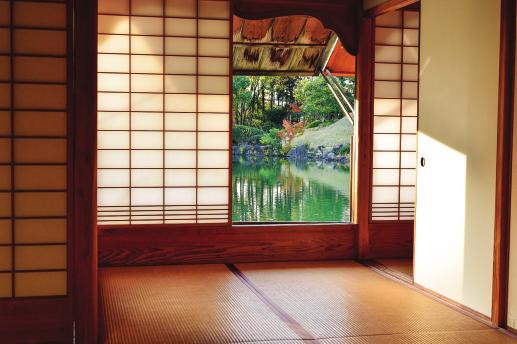
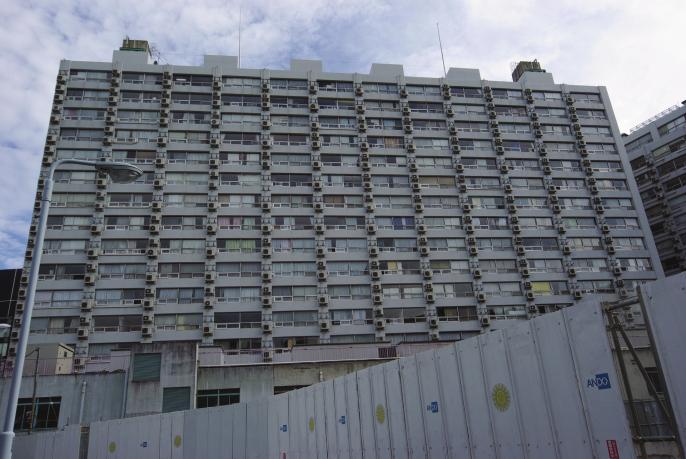
Some novice investors shy away from the Japanese property market believing with a huff and a puff, structures could be blown down. It is true that structures built before 1981, including smaller steel-frame buildings, and even wooden frame houses, were not built to last and require major renovations and repairs over time. However, a major change to the Building Standards Act for earthquake resistant construction methods for buildings (reinforced concrete blocks) occurred in 1981. This became the turning point that investors often looked to when purchasing property. That being said, there is still a niche market for older properties because of the higher yield. In truth, regardless of age, with due diligence, if the property has proof of regular maintenance, renovations, repairs to the interior and exterior, as well as sufficient funds for ongoing repairs, and is tenanted, an older higher yielding property could prove to be a diamond in the rough.

Accepting Foreign Real Estate
Today, the best real estate opportunities do not have to be in your own back yard. JPMorgan Chase says the Japanese real estate and infrastructure is becoming more attractive particularly with no more than 50% of leveraged funds. Above that, real estate doesn’t become the driver, but the leverage becomes the driver of your return.
Japan provides opportunities for stable, monthly cash flow from rental income with yields from 5% to 11% net pre-tax. Add to that, currency exchange and the yen’s role as a safe-haven currency and it’s easy to see why this is a booming market for foreign investors, contrary to the standard real estate investment approach.
Priti Donnelly is the sales and marketing manager at Nippon Tradings International, a proxy and buyers’ agency representing foreign investors with purchasing, selling and managing real estate in Japan. She focuses on Japanese Real Estate, an alternative to speculative real estate investment — steady monthly rental income, high yield, and affordable properties – a market worth considering.
Priti Donnelly – Manager, Sales and Marketing
Nippon Tradings International (NTI)



 Rodeo Realty is a name not just associated with celebrity real estate, but with dominating the ultra-elite markets of Los Angeles and Beverly Hills, California. The Rodeo Realty brand has been ranked the largest single-owner firm in California, with 12 branch offices, 1,300 REALTORS ® , and annual closed sales exceeding $5 billion. What does it take to obtain, and own this level of success?
 Although he is a very hands-on business owner and accessible to his staff, today Syd has certainly handed on the baton to Rodeo Realty’s army of luxury real estate agents, and expert management team. Syd is very clear that he does not compete with his REALTORS ® for sales and credits them for the incredible sales figures posted. Asked how he manages to stay organized, and maintains efficient operations at such scale, Syd simply credits his “good people,” whom he says have become “friends,” more than employees.
 Syd says quite frankly and firmly that “real estate agents that want to serve their clients the best find that ability at Rodeo Realty,” and that “if you’re not on the Rodeo Realty team that’s because you’ve got other priorities, and are putting something else first, rather than serving your clients in the best possible way.”
 Want to see what a great real estate website looks like and view some of the most exclusive real estate eye candy in the world? Check out Syd’s site at