By Marco Santarelli
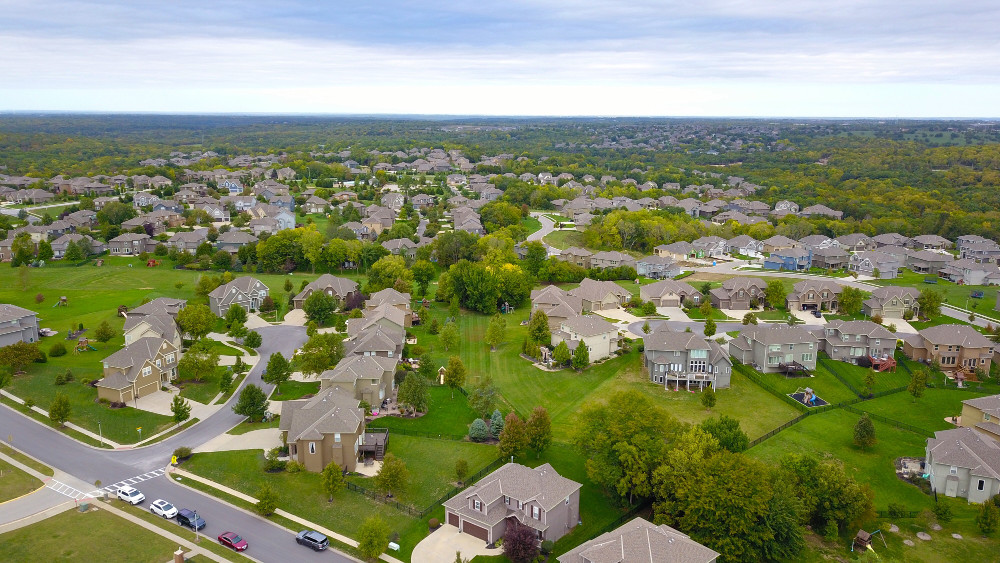
Classifying a neighborhood by “type”, or what many investors refer to as a “grade”, is typically nothing more than a subjective description. Although most people will have a general idea of what is being referred to, in my experience it is usually nothing more than a qualitative rather than quantitative description. Because of that ambiguity, we’ve developed a proprietary, simple grading system that we use with all our investment-grade properties. To help you understand this, a basic overview and description follows:
NEIGHBORHOOD TYPES
Low Income (“C” and “D” grade neighborhoods)
Low income neighborhoods generally have a large portion of their residents on government assistance (for example Section 8 housing assistance). The ratio of renters to owner-occupied homes is greater than 50% and often as high as 80%. These neighborhoods are almost always the most affordable (lowest-priced) areas within a market and usually have some of the highest rent-to-value ratios.
This provides some of the highest cap rates and cash-oncash returns compared to other neighborhood types. You will find substantial area anchors including schools, churches and shopping in these neighborhoods. The anchors are there to meet the needs of the people that live there. Low income neighborhoods are best suited for the wholesale (flip) strategy.
Moderate Income (“B” grade neighborhoods)
Moderate income neighborhoods are similar to Low Income neighborhoods with one critical difference – higher home ownership. While low income areas have a large portion of their residents on government assistance, moderate income areas have a large portion of residents working in the blue-collar sector. This stabilizes the neighborhood and makes for a more attractive investment area.
The ratio of renters to owner-occupied homes is more balanced and closer to 50% for each. Area anchors are similar to low income neighborhoods but with home owners being anchors as well. Moderate income neighborhoods are best suited for the wholesale (flip) and buy-and-hold strategies.
Middle Income (“A” grade neighborhoods)
Completely different in almost every way to low income and moderate income neighborhoods. The biggest differences are homeownership and types of employment. Most of the residents own their homes in these neighborhoods and are employed in high-level blue-collar jobs or in the white-collar sector. Middle income areas are excellent for long-term holds because of the stable nature of the area and tenants.
The ratio of renters to owner-occupied homes is closer to 80% owners and 20% renters. Middle income areas will have a greater number of anchors that meet the wants of the people that live there. These include the three “Ms”: malls, movies and meals. Middle income neighborhoods are best suited for retail fix-andflips and buy-and-hold strategies.
HOME VALUES
Home values vary from market to market, and between neighborhoods within each market. So one should not choose a neighborhood based on the market values alone. It is usually best to target those neighborhoods where property values represent the affordable housing stock in the middle market.
These properties are often within desirable neighborhoods making them easy to lease, buy and sell. Properties in the upper-end of a market’s price spectrum often don’t provide desirable rates of return, while properties in the lower-end of a market’s price spectrum often provide some of the highest expected returns but with the risk of attracting some of the lowest-quality tenants.
SCHOOLS
When it comes to residential real estate investing, it is not as important to have top-rated schools as it is to have multiple schools located in the area. Too many investors put more weight and emphasis on the school’s rating than all the other factors which can be a mistake and cost you in lost opportunities.
While many of our investors choose properties in neighborhoods with some of the best school districts, when it comes to investment properties, often times these properties come at a premium price relative to the income it generates. Many renters are just not willing to pay premium rents for premium schools.
CRIME
Generally speaking, better neighborhoods (“A” and “B”) will have below average crime rates (both violent and property crimes). Although lower relative crime rates are certainly a desirable characteristic to have, it is not the most important factor in your neighborhood selection criteria.
Finally, if you’re working with a reputable company to help you find or provide you with investment-grade properties then they should be able to advise you on the various markets and neighborhoods as well as provide you with detailed information such as neighborhood characteristics and demographics.
 Investing in property can be frustrating, especially when you’re always searching for good financing options that suit your time-frame as an investor.


 By Jillian Ivey Sidoti, Esq.
 Yes, this is a very boiled down step-by-step. Yes, you will need the advice of a professional to help you along the way. However, you need to realize that if you do give all the above steps the appropriate amount of attention, there is no reason that you cannot raise the capital you need.
 By Tim Houghten
 As the new kids on the block, the business moguls captured a very large percentage of the market in a very short span of time. A large percentage of their competition has been in the private money lending sector for 20 years or more. Mehra added that the industry had always been something of an “intuitive-based” one, which both men felt kept it from growing like it could. “We wanted to deliver structure,” said Mehra. “We wanted to shift the industry from the whimsicality it had.”
 “Thanks to the stock market crash, several savvy financiers have a sour taste in their mouths, yet are still hungry for yield,” said Mehra. “We are seeing people, who would otherwise have investment portfolios centered around Wall Street now, deviating into real estate.” Today, instead of owning Microsoft as a growth stock, youthful investors would rather invest in assets they can hedge. The emerging generation with access to capital doesn’t have faith in the stock’s paper and would rather place funds into something concrete. At the end of the day, a hard asset like real property is never worth zero. They can hang their hat on that!
 Mehra and Morsi both feel strongly on not being viewed as a corporation, but as a part of a business network working conjunctively to meet each other’s needs. Out of 360 plus transactions that they’ve written, only two notices of default have occurred.
 For information about MOR Financial visit